
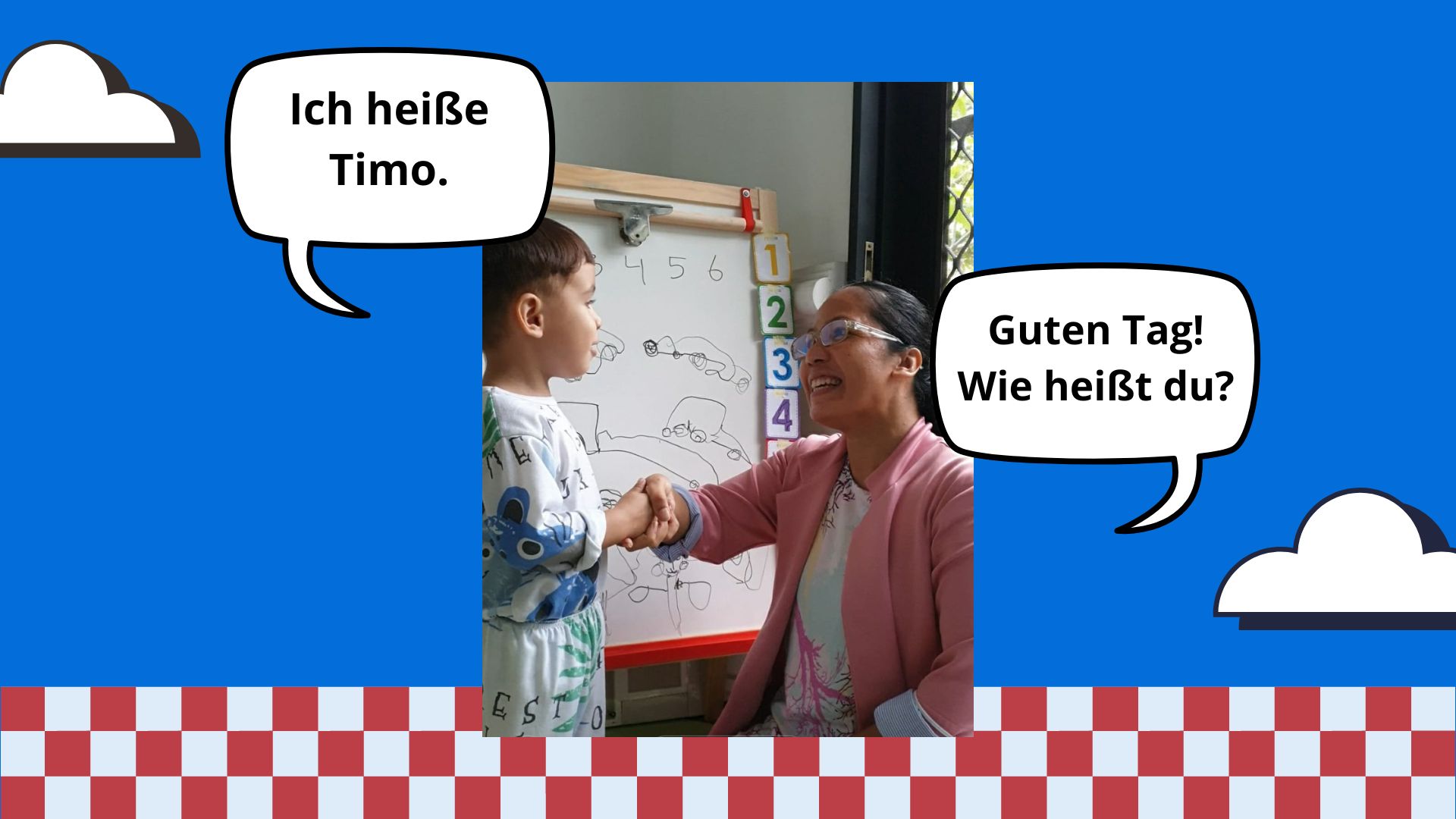
When meeting someone in German, it is important to choose the correct form of “you.”
Unlike English, German has two different words for “you”:
- du – informal
- Sie – formal
Choosing the right one shows politeness and respect.
When Do You Use Sie? (Formal)
Use Sie when speaking to someone you don’t know well or in formal situations.
For example:
- at work
- during a meeting
- at a conference or seminar
- when speaking to a customer
- when talking to a teacher, professor, or doctor
- when meeting an older person for the first time
When introducing yourself in a formal situation, you can say:
Freut mich, Sie kennenzulernen.
Nice to meet you.
When Do You Use du? (Informal)
Use du with people you know well or in relaxed, informal situations.
For example:
- friends
- classmates
- family members
- children
- many young people
- people who have invited you to use du
In an informal situation, you can say:
Freut mich, dich kennenzulernen.
Nice to meet you.
A Helpful Tip
If you are unsure whether to use du or Sie, choose Sie.
Using Sie is considered polite, while using du too early may sound overly familiar or even disrespectful.
Many Germans will tell you when it is appropriate to switch from Sie to du.
German Personal Pronouns (Personalpronomen)
The table below shows the German personal pronouns. These are some of the most important words you will use when speaking German.
| German | English | Meaning |
|---|---|---|
| ich | I | I |
| du | you | singular, informal |
| er | he | masculine |
| sie | she | feminine |
| es | it | neuter |
| wir | we | we |
| ihr | you | plural, informal |
| Sie | you | formal (singular and plural) |
| sie | they | they |
Watch Out! Three Different Meanings of sie
One of the most confusing words for beginners is sie because it has three different meanings.
| German | Meaning |
|---|---|
| sie | she |
| sie | they |
| Sie | you (formal) |
How do you know which one is correct?
The answer is context.
Examples:
- Sie kommt aus Berlin. → She comes from Berlin.
- Sie kommen aus Berlin. → You (formal) come from Berlin.
- Sie kommen aus Berlin. → They come from Berlin.
At first glance, the last two sentences look identical. In spoken German, the meaning becomes clear from the situation. In writing, Sie (formal “you”) is always capitalized, while sie (“she” or “they”) is written with a lowercase s.
Learning Tip
Don’t try to memorize the pronouns one by one. Instead, learn them in pairs:
- ich ↔ wir (I ↔ we)
- du ↔ ihr (you ↔ you all, informal)
- er / sie / es (he / she / it)
- Sie (formal you)
Once you know these pronouns, you’ll be ready to build your first German sentences, because almost every sentence begins with one of them.
————————————————————————————————————————————————————————————————————————
Introducing Yourself in German
One of the first things you’ll do when learning German is introduce yourself. Whether you’re meeting a new classmate, attending a language course, or making new friends, a simple self-introduction is a great way to start a conversation.
A basic introduction usually includes the following information:
- Say hello.
- Tell people your name.
- Say how old you are.
- Say where you come from and where you live now.
- Talk about your job or studies.
- Mention one or two hobbies.
Here is an example:
Example
Guten Morgen!
Good morning!
Mein Name ist Daniel.
My name is Daniel.
Ich bin 47 Jahre alt.
I am 47 years old.
Ich komme aus Frankfurt in Deutschland und jetzt wohne ich in Tangerang, Indonesien.
I come from Frankfurt, Germany, and I now live in Tangerang, Indonesia.
Ich arbeite als Berater.
I work as a consultant.
Ich sehe gerne Animationsfilme und ich lese gern.
I enjoy watching animated movies, and I like reading.
Your Turn!
Now it’s your turn to introduce yourself in German.
Use the questions below to help you build your introduction.
- Wie heißt du? (What is your name?)
- Wie alt bist du? (How old are you?)
- Woher kommst du? (Where do you come from?)
- Wo wohnst du? (Where do you live?)
- Welche Sprachen sprichst du? (Which languages do you speak?)
- Was bist du von Beruf? (What is your job?) (or: Was machst du beruflich?)
- Was sind deine Hobbys? (What are your hobbies?)
Write a short introduction of 6–8 sentences using these questions as a guide.
Useful Sentence Patterns
You can use these sentence starters to help you.
| German | English |
|---|---|
| Mein Name ist … | My name is … |
| Ich bin … Jahre alt. | I am … years old. |
| Ich komme aus … | I come from … |
| Ich wohne in … | I live in … |
| Ich spreche … | I speak … |
| Ich arbeite als … | I work as a … |
| Ich bin Schüler. / Ich bin Student. | I am a school student. / I am a university student. |
| Meine Hobbys sind … | My hobbies are … |
| Ich spiele gern … | I enjoy playing … |
| Ich lese gern. | I enjoy reading. |
| Ich sehe gern Filme. | I enjoy watching movies. |
Learning Tip
Don’t try to memorize a long paragraph. Instead, memorize sentence patterns that you can reuse.
For example:
- Ich komme aus …
- Ich wohne in …
- Ich arbeite als …
- Ich spreche …
- Ich spiele gern …
Once you’ve learned these patterns, you only need to change the final word or phrase to talk about yourself. This makes speaking German much easier and helps you become more confident in real conversations.
Challenge: After writing your introduction, read it aloud several times. Then try introducing yourself without looking at the text. Speaking from memory is one of the fastest ways to improve your fluency and confidence in German.
—————————————————————————————————————————————————————————————————————
Practice Conversation: Meeting Someone for the First Time
Imagine you are travelling in Germany. You are sitting on a train or attending a party at a German friend’s house. You see someone you don’t know and would like to start a conversation.
Read the dialogue below.
Dialogue
Man: Entschuldigen Sie, verstehen Sie Englisch?
(Excuse me, do you speak English?)
Woman: Nein, ich verstehe kein Englisch.
(No, I don’t understand English.)
Man: Ich verstehe ein bisschen Deutsch.
(I understand a little German.)
Woman: Sind Sie Amerikaner?
(Are you American?)
Man: Ja, ich bin Amerikaner.
(Yes, I am American.)
Your Turn!
Can you say the following sentences in German?
Try to answer without looking at the answer key. Don’t worry if you make mistakes—that’s how you learn!
- I don’t understand English.
- She understands German.
- We understand a little German.
- Are you American? (female, formal)
- Yes, I am American. (male)
- Excuse me, are you German? (male, formal)
- English (the language)
- She is American.
- He is German.
- We understand German.
- Are you American? (male, informal)
- Is she German?
- I am Indonesian.
- Do you understand German? (formal)
- I understand a little German.
Answer Key
- Ich verstehe kein Englisch.
- Sie versteht Deutsch.
- Wir verstehen ein bisschen Deutsch.
- Sind Sie Amerikanerin? (female, formal)
- Ja, ich bin Amerikaner. (male)
- Entschuldigen Sie, sind Sie Deutscher? (male, formal)
- das Englisch
- Sie ist Amerikanerin.
- Er ist Deutscher.
- Wir verstehen Deutsch.
- Bist du Amerikaner? (male, informal)
- Ist sie Deutsche?
- Ich bin Indonesier. (male)
Ich bin Indonesierin. (female) - Verstehen Sie Deutsch? (formal)
- Ich verstehe ein bisschen Deutsch.
Grammar Notes
Before moving on, notice these useful patterns:
1. Nationalities
In German, nationalities are not preceded by an article when they describe a person’s nationality.
- Ich bin Amerikaner.
- Sie ist Deutsche.
- Er ist Indonesier.
Notice that nationalities change according to gender.
| Male | Female |
|---|---|
| Amerikaner | Amerikanerin |
| Deutscher | Deutsche |
| Indonesier | Indonesierin |
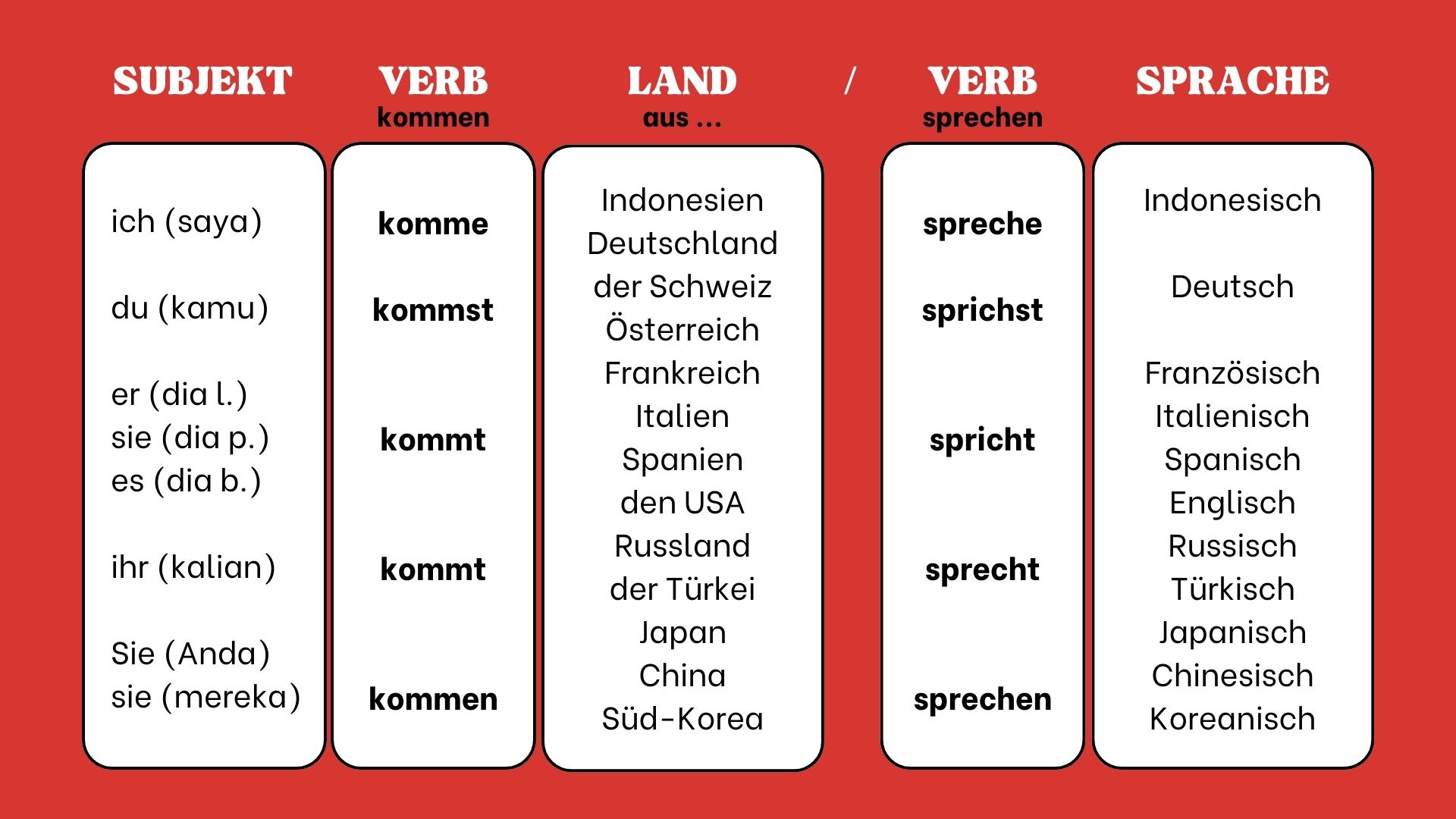
2. Asking Questions
To ask a yes/no question in German, the verb comes first.
Examples:
- Sind Sie Amerikanerin?
- Bist du Deutscher?
- Verstehen Sie Deutsch?
- Ist sie Deutsche?
This word order is one of the most important patterns in German conversation.
3. ein bisschen
The expression ein bisschen means “a little” or “a little bit.”
Examples:
- Ich verstehe ein bisschen Deutsch.
- Ich spreche ein bisschen Deutsch.
- Ich lese ein bisschen Deutsch.
This is a very useful phrase for beginners and one you’ll hear often in everyday conversations.
Learning Tip
Try reading the dialogue aloud with a partner. Then change the nationalities and languages to create your own conversations.
For example:
- Verstehen Sie Französisch?
- Nein, ich verstehe kein Französisch.
or
- Sind Sie Kanadier?
- Nein, ich bin Australier.
By changing just a few words, you can practise dozens of real-life conversations while reinforcing the same grammar patterns naturally. This is one of the fastest ways to build confidence in speaking German.
0 Comments